
IPPC-certified wooden pallets – what do you need to know before exporting to the US, Australia and Asian markets?
Are you shipping goods on wooden pallets to the United States, Australia, China or Japan? Without the correct IPPC marking, your pallet will be held up at the border – and with it, the entire shipment. The costs of storage, on-site fumigation and, in extreme cases, returning the goods to the sender, can far exceed the value of the pallet itself. In this article, we explain what an IPPC certificate is, what requirements apply in individual export markets and how to avoid the most costly mistakes.
What are the IPPC certificate and the ISPM 15 standard?
The IPPC (International Plant Protection Convention) is an international convention aimed at preventing the spread of harmful organisms through international trade. In the context of wooden pallets, the key standard is ISPM 15 (International Standards for Phytosanitary Measures No. 15), which specifies the requirements for wooden packaging material used in international trade.
The ISPM 15 standard requires that wood used in the manufacture of export pallets undergo phytosanitary treatment to eliminate pests and their larvae. Approved treatment methods include heat treatment (HT), which involves heating the core of the wood to a minimum of 56°C for at least 40 minutes, and fumigation with methyl bromide (MB – Methyl Bromide), although the latter is being phased out in an increasing number of countries due to its harmful effects on the ozone layer.
Once properly treated, each wooden pallet must be marked with an IPPC stamp, applied in a permanent and legible manner, containing: the IPPC symbol (an ear of corn with a design), the two-letter country code (PL for Poland), the number of the certified facility, the code for the treatment method used (HT or MB) and – optionally – the DB (Debarked) code, confirming that the bark has been removed. This stamp is the pallet’s ‘phytosanitary passport’ – without it, the goods will not cross the border of any country applying ISPM 15.
It is worth noting that the requirements of ISPM 15 apply exclusively to solid wood – the standard does not cover pallets made from engineered wood (plywood, OSB, chipboard), as the manufacturing process for these materials eliminates harmful organisms. In practice, however, the vast majority of export pallets are made from solid wood, which means that an IPPC certificate is essential for virtually every export consignment on wooden pallets.
Phytosanitary requirements in key export markets
United States – APHIS and strict controls
The US market is regulated by APHIS (Animal and Plant Health Inspection Service), an agency under the US Department of Agriculture (USDA). The United States applies the ISPM 15 standard in full – every wooden pallet entering US territory must bear a legible IPPC stamp with the code HT or MB. Since 2023, APHIS has tightened controls, increasing the frequency of inspections at ports and border crossings.
The consequences of breaching the rules are severe. Goods on a pallet without an IPPC stamp are automatically detained. The importer has a choice: on-site fumigation (costing between USD 500 and USD 2,000 depending on the volume), re-export at the sender’s expense, or disposal of the pallet and transhipment to certified carriers. Each of these options results in delays lasting days or weeks – and storage fees at US ports are among the highest in the world.
Additional requirement: The USA does not accept methyl bromide (MB) fumigation for imports from many countries – the only accepted method is heat treatment (HT). For Polish exporters, this means that pallets must come from a facility that uses heat drying rather than chemical fumigation. At Danpol, we have been using only the HT method in our timber drying plant in Delów for years, which eliminates this problem at source.
Australia – the strictest regulations in the world
Australia has some of the strictest phytosanitary regulations in the world, administered by the Department of Agriculture, Fisheries and Forestry (DAFF, formerly AQIS). Australians regard the protection of their ecosystem as a national priority – it is worth noting that the natural pests of European forests do not occur in Australia, meaning that any introduced organism could cause catastrophic ecological and economic damage.
Australian requirements go beyond the ISPM 15 standard. In addition to the IPPC stamp and HT treatment, Australia requires that packaging timber be free of bark (debarked – code DB on the stamp). Leaving even a small fragment of bark – residual, under fittings, in grooves – is grounds for the consignment to be detained. DAFF inspectors apply a ‘zero tolerance’ policy for bark, which means that every pallet is a potential target for inspection.
The penalties for non-compliance are severe: ranging from mandatory fumigation at the port (MB method – costing AUD 1,500–5,000 per container), through re-export, to the complete disposal of the cargo along with its packaging. In extreme cases, the Australian authorities may impose an import ban on a specific consignor or their packaging supplier. For the exporter, this means losing the ability to ship goods to Australia for a period of up to several months.
Asian markets – China, Japan, South Korea, India
Asian markets vary in terms of the strictness of their regulations, but they all apply the ISPM 15 standard. China (regulated by the GACC – General Administration of Customs) carries out random inspections at ports of entry and requires a legible IPPC stamp. In practice, Chinese inspections can be more stringent than official regulations would suggest – customs inspectors may detain goods if the stamp is even partially illegible or if the pallet shows signs of repair suggesting that parts have been replaced with uncertified timber.
Japan (MAFF – Ministry of Agriculture, Forestry and Fisheries) applies ISPM 15 with an additional emphasis on documentation. Japanese importers often require a certificate confirming heat treatment in the form of a separate document – not just a stamp on the pallet. South Korea (APQA – Animal and Plant Quarantine Agency) has requirements similar to those of Japan, with regular audits of facilities supplying packaging timber to the Korean market.
India (DPPQS – Directorate of Plant Protection, Quarantine and Storage) requires an IPPC stamp and accepts only heat treatment (HT); methyl bromide fumigation is not accepted for imported packaging wood. Furthermore, for larger import volumes, Indian customs may require a phytosanitary certificate issued by the plant protection inspection authority in the country of origin.
Types of wooden pallets used in export
EPAL pallets – a European standard with a global reach
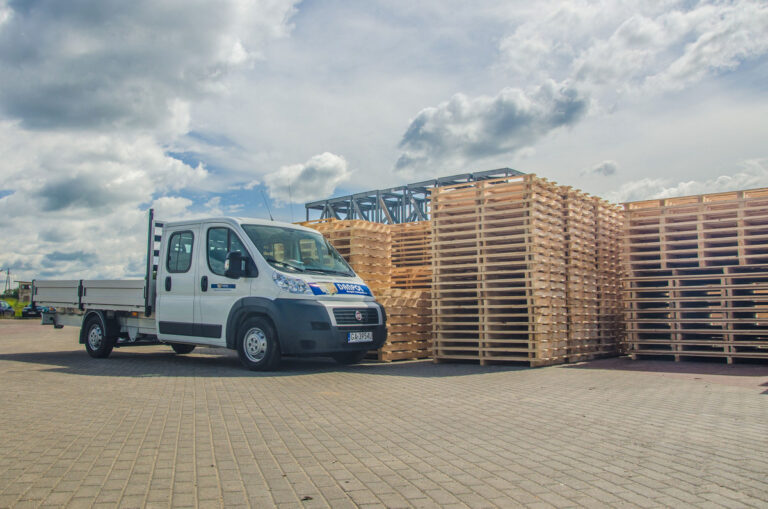
EPAL (European Pallet Association) pallets measuring 1200 × 800 mm are the most widely used standard in European logistics and also the most commonly chosen type of pallet for export. They are compatible with most warehouse, racking and transport systems worldwide. At Danpol, we manufacture EPAL pallets from ISPM 15-certified timber – every pallet leaving our facility bears an IPPC stamp with the code HT, which guarantees compliance with phytosanitary requirements in all target markets.
Custom pallets – tailored to specific loads and routes
Not every load fits on a standard EPAL pallet. Components with non-standard dimensions, uneven weight distribution or specific customer requirements call for bespoke pallets – designed to suit the exact dimensions and weight of the load. We manufacture pallets in any size, made of wood, with the option of reinforcing them with steel fittings for heavy loads.
When exporting non-standard pallets, the same ISPM 15 requirements apply as for EPAL pallets – the wood must be heat-treated and marked with an IPPC stamp. The difference is that non-standard pallets require a bespoke design taking into account the weight of the load, the method of handling (forklift, crane, manual handling), the mode of transport (container, lorry, air freight) and stacking requirements.
Pallets as part of a packaging system
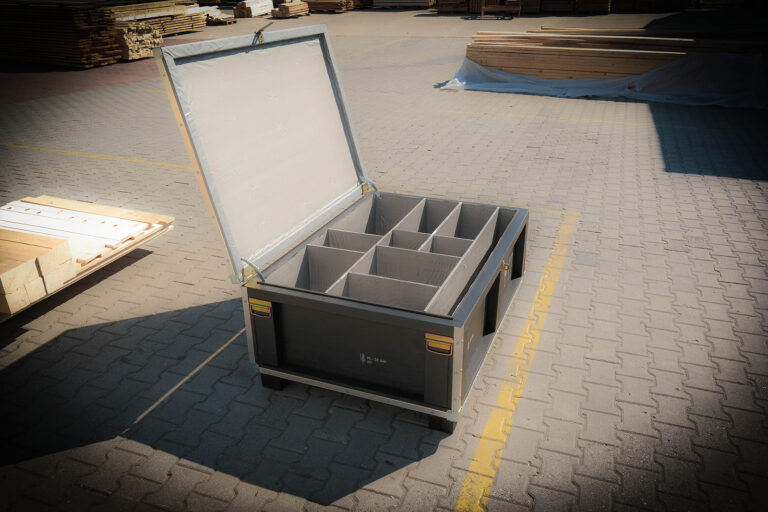
In the export sector, pallets are rarely used on their own – they form part of a larger packaging system comprising transport crates, pallet collars, protective film and securing devices. All wooden components of this system – including the pallet, crate, pallet collars and wedges – must comply with ISPM 15 requirements and bear the IPPC stamp. Omitting even a single component (e.g. wooden wedges used for securing the load inside the container) may result in the entire shipment being detained at the border.
What is the production process for certified pallets at Danpol?
The ISPM 15 certificate is not a document that can simply be ‘bought’ and attached to a pallet. It is confirmation that the entire production process – from raw material to finished product – meets stringent phytosanitary requirements. We hold ISPM 15 certification and are listed in the register of establishments authorised to mark packaging timber with the IPPC stamp. Here is what our process looks like:
Raw materials – a controlled source of timber. We purchase our raw materials from certified suppliers. Every batch is recorded and identified – we know the origin of every board, which is essential in the event of a phytosanitary audit.
Thermal drying in our drying kiln. At our Delów facility, we have a timber drying kiln where we carry out thermal treatment that exceeds the requirements of ISPM 15. The entire process is monitored by temperature sensors placed within the core of the test samples.
Production and marking. After heat treatment, the timber is sent for pallet production. The finished pallet is marked with an IPPC stamp bearing our certification number, the code PL (Poland), the HT method and the symbol DB (debarked). The stamp is applied in a permanent and legible manner – this is crucial, as an illegible stamp is treated at the border in the same way as no stamp at all.
Quality control. Every batch of pallets undergoes quality control, which includes: checking the legibility of the IPPC stamp, ensuring the absence of bark (a requirement for the Australian and many Asian markets), and verifying dimensions and structural strength. We operate under the ISO 9001:2015 quality management system, which ensures the consistency and traceability of every production batch.
The most common mistakes when exporting goods on wooden pallets
Having supported export businesses for over 30 years, we see the same mistakes being made time and again – mistakes that are costly, yet easy to avoid with proper planning. Here are the most common problems faced by exporters:
An illegible or damaged IPPC stamp. The stamp must be legible at the time of the border inspection, not just at the time of dispatch. Sea transport, rain and scuffing during handling can all cause the stamp to become illegible.
Bark remnants on the wood. The ISPM 15 standard permits small amounts of bark (up to 3 cm wide or up to 50 cm² in area), but Australia and some Asian markets apply a ‘zero bark’ policy. Any piece of bark – even if hidden under fittings or in joint grooves – is grounds for the consignment to be detained. We inspect every pallet before dispatch to these markets.
Mixing certified timber with uncertified timber. A common mistake when repairing pallets: replacing a damaged board with timber that has not undergone heat treatment. Even a single uncertified board in a pallet means that the entire pallet loses its ISPM 15 status and cannot be exported. When repairing export pallets, only heat-treated timber should be used, and the pallet must be re-marked with the IPPC stamp.
Lack of ISPM 15 certification on auxiliary components. Exporters remember the pallets but forget about wooden wedges, spacers, risers and dunnage inside the container. Every solid wood component is subject to ISPM 15 requirements – omitting even a single wooden wedge results in the shipment being detained, even though the pallets themselves are correctly certified.
A pallet without the goods properly packaged. An IPPC certificate on the pallet is a necessary but not sufficient condition. The goods on the pallet must be properly secured – with stretch film, strapping, and protective corner protectors – and, for sea exports, they require full export packaging with VCI anti-corrosion protection and barrier film. A pallet is a carrier – not a substitute for packaging.
Inadequate documentation for the destination market. Some countries (Japan, Korea) require additional documentation confirming heat treatment, beyond simply a stamp on the pallet. The absence of such documentation does not always result in the goods being held up, but it can cause a delay in customs clearance of several days – which is a serious problem for just-in-time deliveries.
Are there any markets where ISPM 15 does not apply?
Yes, although the list is getting shorter. Trade within the European Union does not require an IPPC stamp – packaging wood on intra-EU routes does not need to undergo heat treatment. The same applies to trade between countries covered by joint phytosanitary agreements (e.g. Canada and the US on selected routes). However, the rule is simple: if goods leave the EU – and the vast majority of exports from Poland do – an ISPM 15 certificate is required.
In practice, we recommend that our customers use ISPM 15-certified pallets even for shipments within the EU, if there is any likelihood that the goods will subsequently be re-exported outside the EU. The cost of a certified pallet is only slightly higher than that of an uncertified one – and avoiding logistical problems in the event of re-export is priceless.
Pallets in a container – how to secure a palletised load at sea
A certified pallet alone does not guarantee safe transport – the correct positioning and securing of pallets inside the container is crucial. In sea transport, the rolling of the ship generates lateral forces of up to 0.8 g, whilst sudden braking generates longitudinal forces of up to 0.5 g. Unsecured pallets shift, tip over, and collide with one another and the container walls. That is why we combine pallet delivery with container stowage services – we arrange the pallets in accordance with the loading plan, securing them with ISPM 15-certified dunnage, Cordstrap woven straps and anti-slip mats. Our staff, trained by SGS Poland and Cordstrap, carry out stowage in accordance with IMO/ILO guidelines on the stowage of cargo in maritime transport (SOLAS).
Important note: the dunnage timber used to secure pallets inside a container must also bear the IPPC stamp. This is one of the most commonly overlooked aspects – the exporter orders certified pallets, but uses uncertified timber for the wedges and spacers inside the container. At Danpol, we ensure that every wooden component in the container – from the pallet to the very last dunnage wedge – is ISPM 15 certified.
Frequently Asked Questions (FAQ)
Does the ISPM 15 certificate on the pallet have an expiry date?
No. The ISPM 15 certificate (IPPC stamp) does not have an expiry date in the formal sense. However, the stamp must be legible at the time of the border inspection. If a pallet is stored for a long time in adverse conditions (outdoors, exposed to rain and UV light), the stamp may become illegible – and an illegible stamp is treated as if there were no stamp at all.
Can I repair a damaged pallet and still use it for export?
Yes, but only if ISPM 15 heat-treated wood is used. Replacing even a single plank with non-certified wood renders the entire pallet invalid. After repair, the pallet must be re-marked with the IPPC stamp by a certified facility. In practice, it is often cheaper and safer to order a new certified pallet than to risk problems at the border with a pallet repaired ‘on one’s own’.
How much does an ISPM 15-certified pallet cost compared to a standard one?
The price difference between a certified and an uncertified pallet is usually 10–20%. This is made up of the cost of heat treatment, stamp marking and maintaining identification records. Given that detaining a single container at the border costs several times more than the entire batch of certified pallets, saving on certification is economically irrational.
Are plastic or metal pallets subject to ISPM 15?
No. The ISPM 15 standard applies only to solid wood. Plastic, metal and wooden pallets made entirely from processed wood (plywood, OSB, HDF) do not require an IPPC certificate. However, they are more expensive, heavier or have other logistical limitations, which is why solid wood pallets with ISPM 15 certification remain the most commonly chosen solution for export.
What documents do I need to prepare when exporting on wooden pallets?
The basic requirement is an IPPC stamp on every pallet. For certain markets (Japan, Korea), it is advisable to provide an additional certificate confirming heat treatment. When exporting to Australia, ensure that the pallets are free of bark (DB code on the stamp). In all cases, a packing list is useful, detailing the packaging timber used and the manufacturer’s ISPM 15 certificate number.
How quickly can you fulfil an order for ISPM 15-certified pallets?
We can supply standard EPAL pallets with ISPM 15 certification within 2–5 working days. Non-standard pallets – depending on quantity and complexity – take 3 to 7 working days. As we work closely with our export clients, we maintain a stock of heat-treated timber, which enables us to fulfil orders even on an express basis.
Summary
An IPPC certificate on a wooden pallet is not just a formality – it is essential for smooth exports. Each target market has its own specific requirements: the US does not accept MB fumigation, Australia applies a ‘zero bark’ policy, and Asian markets require additional documentation. Understanding these differences and ensuring pallets are properly prepared eliminates the risk of costly delays at the border.
At Danpol, we have been manufacturing wooden pallets for over 30 years, and ISPM 15-certified pallets for over 15 years. We have our own timber kiln, a certified production facility and experience in handling exports to every continent. From EPAL pallets to bespoke designs, from single units to runs numbering in the thousands – we provide a full range of packaging services with a guarantee of phytosanitary compliance in every target market.
Are you exporting on wooden pallets? Make sure your pallets pass every inspection. Contact us– we’ll select pallets and packaging tailored to your target market.