

Our Projects
Export packaging of an industrial robot for sea transport
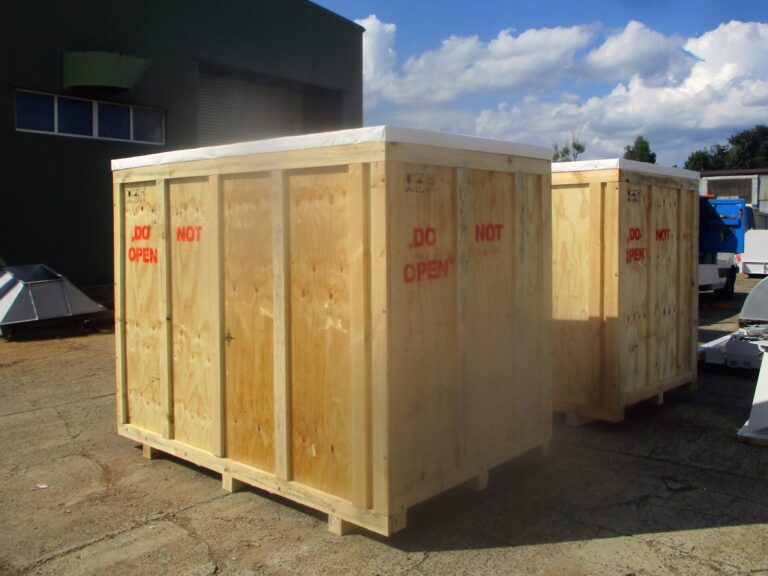
We carried out a complex project to pack an export industrial robot in Lublin for shipping. The task required the design and manufacture of seven dedicated IPPC transport boxes of various dimensions and a special platform for the robotic arm.
Scope of service provided:
Description of the implementation of the order:
Design and manufacture of dedicated wooden transport boxes
Based on the exact dimensions and specifications of the individual components of the industrial robot, our specialists designed and manufactured seven wooden transport crates of various sizes. Each crate was made from certified IPPC/ISPM15-compliant timber, ensuring compliance with international phytosanitary regulations required for maritime transport. The structures of the crates have been reinforced at critical points to ensure maximum protection and stability during transport.
Multi-level corrosion and moisture protection
Due to the high value and sensitivity of the robot’s electronic components, a comprehensive corrosion and moisture protection system was used. The individual components were first carefully wrapped in bubble wrap, which provided basic mechanical protection. Next, a specialised VCI corrosion film with volatile corrosion inhibitors was applied, creating an active chemical barrier to protect the metal components from oxidation. Moisture absorbers were deployed inside the boxes and anti-corrosion capsules were installed in hard-to-reach areas, such as inside the control panels and complex mechanisms of the robot. This solution provided full corrosion protection for up to 12 months.
Vacuum packaging and monitoring systems
After basic protection, the robot components were vacuum packed using ALU barrier foil. This technique involves completely removing the air from the space around the component to be packed and sealing it in aluminium foil with high barrier properties. This ensures that the unit is completely isolated from the effects of moisture, oxygen and other atmospheric factors, which is particularly important during sea transport. A special inspection window has been made in one of the boxes to allow periodic inspection of the moisture indicator without having to open the entire package.
Lashing and load stabilisation systems
All robot components were solidly attached to the base of the boxes using high-quality Cordlash conveyor belts, which have exceptional tensile strength. In addition, wooden blocking elements and anti-slip mats were used to increase the stability of the entire structure. Special attention was paid to securing the robotic arm, which requires special immobilisation methods due to its design.
Finalisation of packaging and preparation for sea transport
The final stage of implementation was to apply the appropriate transport markings to each box, in accordance with international standards. The markings included information on dimensions, weight and special instructions for handling the cargo. Once all the work was completed, a detailed quality control check was carried out to ensure that all the securing had been done correctly and that the cargo was fully prepared for safe sea transport.