

Our Projects
Export packaging of control cabinets for sea transport
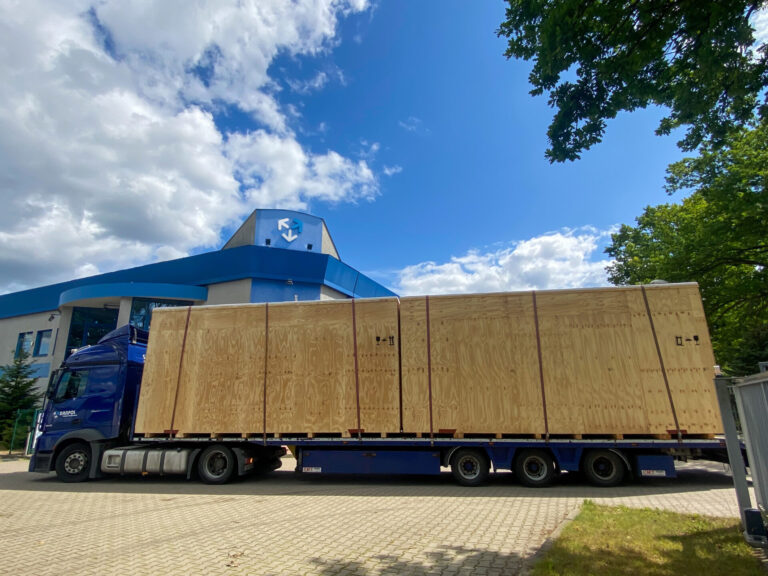
At the beginning of January 2024, Danpol completed an order for comprehensive export packaging of control cabinets for long-distance sea transport. A combination of vacuum packing, corrosion protection and custom-designed high-tightness transport crates was used. A total of 15 crates were secured in full compliance with international ISPM15 standards, guaranteeing that the cargo would arrive safely at its destination – regardless of the weather conditions prevailing during the voyage.
Scope of service provided:
Description of the implementation of the order:
1. design and manufacture of customised transport boxes
The Danpol team designed and manufactured 15 transport boxes, adapted to the dimensions and specifics of the cabinets. The crates were made of dry coniferous wood and plywood with IPPC phytosanitary certificate, which ensures compliance with international regulations and safety in maritime transport.
2. sheathing of crates and preparation for packing
Each box is finished with AW100 conifer plywood sheathing, characterised by high resistance to moisture and mechanical damage. As a result, the boxes guarantee durability and protection even in harsh marine environments.
3. corrosion and moisture protection
Sharp edges were protected with bubble wrap to avoid tearing the barrier lagging, protecting both equipment and packaging from mechanical damage during transport and handling. The control cabinets were tightly packed in VCI film with volatile corrosion inhibitors, followed by the application of ALU-PE barrier film, followed by a tight seal and air extraction to the required pressure. Moisture absorbers were placed inside the boxes to minimise the risk of condensation. This combination provides maximum protection against corrosion and the effects of moisture for up to 12 months, which is crucial for sea transport
4. fixing and final preparation for shipment
Each cabinet was immobilised inside a crate to prevent movement during transport. The crates were sealed and labelled, and all were prepared for safe loading onto a shipping container, in accordance with current industry standards and requirements.